Workshop on Statistical Analysis for Thesis and Manuscript Writing

Workshop on Statistical Analysis

Date & Time: 22 October 2023, 4 - 5 PM

Location: Online Event | Free Registration

About the Event

Join us for a transformative Free Workshop on Statistical Analysis for Thesis and Manuscript Writing organized by Thesis Writing Cafe. This virtual event will take place on October 22, 2023, at 04:00 PM. Don’t miss this opportunity to enhance your research quality and unlock academic excellence!
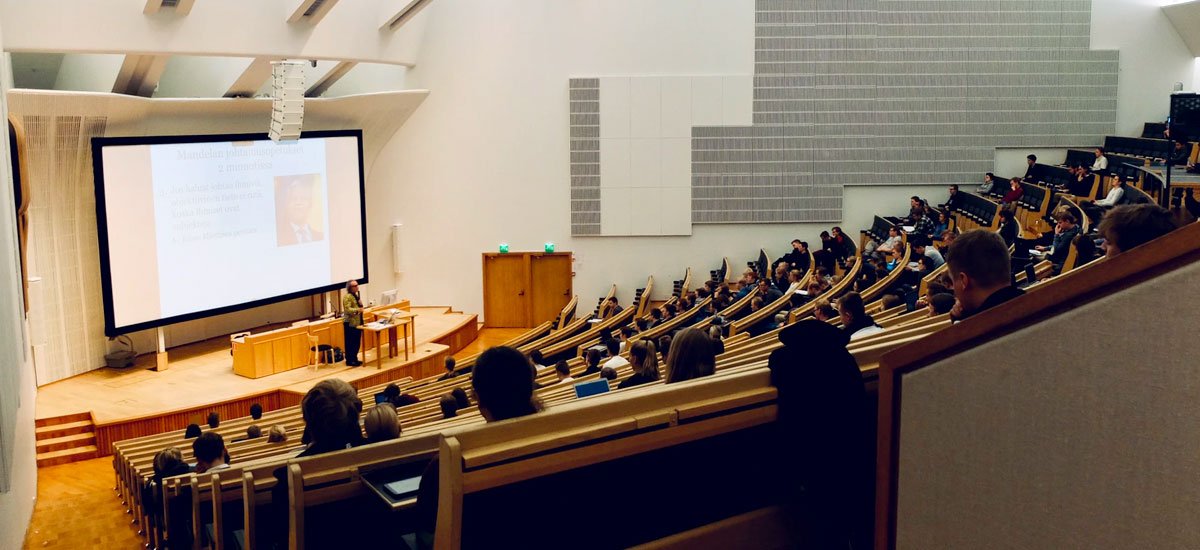
This workshop is specifically designed for graduate students working on their thesis, dissertation researchers preparing manuscripts for publication, and academics interested in improving their statistical analysis skills. Moreover, whether you’re new to statistical analysis or looking to sharpen your existing knowledge, this workshop provides valuable insights and practical learning experiences.

What You Will Learn

  • How to apply statistical methods to make your research more robust.
  • Techniques that reviewers and examiners look for in theses and manuscripts.
  • Hands-on exercises and real-world examples to gain practical skills.
  • Strategies to improve your chances of academic success.

Consequently, by attending this workshop, you can immediately apply what you learn to your own research projects and publications.

Our Focus

This workshop emphasizes statistical modeling and analysis to enhance your thesis and manuscript writing. Additionally, it aims to capture your attention, generate interest, and encourage you to confidently perform statistical analysis independently.

Don’t miss this must-attend workshop hosted by Thesis Writing Cafe, where you can gain the knowledge and skills necessary for successful thesis and manuscript writing.

Statistical Analysis Workshop for Thesis

Before You Book a Workshop

Statistical analysis is the backbone of quantitative research, yet it remains one of the most anxiety-inducing aspects of postgraduate study. Many PhD and Master’s students reach the data analysis phase with limited formal statistical training, leaving them uncertain about which tests to apply, how to interpret outputs, and how to present findings convincingly.

Our workshops bridge the gap between theoretical knowledge and practical application. Sessions cover: foundations of research statistics, parametric tests (t-tests, ANOVA, ANCOVA), correlation and regression analysis, factor analysis (EFA and CFA), structural equation modelling (SEM), non-parametric alternatives, qualitative data analysis using NVivo, and mixed methods integration strategies.

Workshop participants gain hands-on practice in IBM SPSS Statistics, R (with RStudio), Stata, AMOS, SmartPLS, and NVivo. We provide step-by-step guidance on data entry, cleaning, transformation, analysis execution, and output interpretation for each package. No prior programming experience is required for R sessions.

Workshops run online via Zoom/Teams and in-person at locations across India and the UAE. Group sessions are capped at 12 participants to ensure individual attention. One-to-one coaching sessions are also available. All participants receive workshop materials, exercise datasets, reference guides, and 30-day post-workshop email support.

Software Covered in the Workshop: IBM SPSS Statistics is the most widely used package in social science research, ideal for descriptive statistics, t-tests, ANOVA, regression, factor analysis, and reliability testing. R (RStudio) provides unmatched analytical depth for advanced modelling, multilevel models, Bayesian analysis, and publication-quality visualisation via ggplot2. Stata is favoured in economics and public health for panel data and survival analysis. AMOS handles covariance-based SEM and CFA, while SmartPLS is the leading PLS-SEM software for management and IS research. NVivo provides qualitative data analysis for thematic, content, and discourse analysis. No prior programming experience is required for any R sessions — we start from scratch and build confidence progressively.

Who Should Attend? PhD and Master’s students at the data analysis stage; early-career researchers preparing journal papers; faculty upskilling in advanced methods; and professionals who need to interpret and communicate statistical findings. Sessions are available as full-day intensives, multi-week online modules, or customised programmes tailored to your research design. Group sizes are capped at 12 participants to ensure individual attention. One-to-one coaching is also available for researchers with specific analytical challenges or tight submission deadlines. Contact us to check upcoming dates or arrange a bespoke session.

Students attending the statistical analysis workshop often arrive after completing their questionnaire preparation and are ready to analyse their collected data. If you have not yet validated your measurement instrument, our tool validation service ensures your scale is reliable before analysis begins. Scholars working on doctoral studies can complement workshop attendance with our broader PhD support services, including data collection and analysis software guidance. If you are unsure where to start, book a free PhD consultation before the workshop.

How to Analyse Thesis Data Using Statistical Methods

A structured guide to choosing and applying statistical tests for quantitative research data in a thesis or dissertation.

Step 1: Identify your data type and measurement level
Determine whether your dependent variables are continuous (ratio/interval), ordinal, or nominal. This determines which statistical tests are appropriate.

Step 2: Check data for normality and outliers
Use the Shapiro-Wilk test (small samples) or Kolmogorov-Smirnov test for normality. Identify outliers using box plots and z-scores. Decide whether to use parametric or non-parametric tests.

Step 3: Select the appropriate statistical test
Use t-tests or ANOVA for group comparisons with continuous outcomes. Use chi-square for categorical comparisons. Use regression for prediction and relationship testing. Use PLS-SEM or CB-SEM for structural models.

Step 4: Run the analysis in SPSS or SmartPLS
Enter clean, coded data. Run descriptive statistics first. Then run your chosen tests. Record all test statistics, degrees of freedom, p-values, and effect sizes.

Step 5: Interpret and write up findings
Report results in APA format: include test statistics, significance levels, and effect sizes. Interpret each result in relation to your research hypotheses. Connect findings to your literature review.